There is a moment many high-performing women hit in their 40s or early 50s when they realize something has changed.
The workouts are still hard. The discipline is still there. The nutrition is cleaner than ever. But the results feel slower. The midsection feels softer. Recovery takes longer. Energy fluctuates.
It feels personal.
It is not.
Menopause is a physiological transition, not a character flaw. Estrogen shifts influence fat storage patterns, muscle retention, insulin sensitivity, and recovery capacity. What used to work at 35 may not work the same way at 48. That does not mean you need to train harder. It means you need to train smarter.
Most women respond by cutting calories or adding more high intensity sessions. That often backfires. Undereating increases stress load. Excess intensity elevates cortisol. Sleep declines. Fat loss stalls further. Confidence drops.
The real shift happens when you move from guessing to measuring.
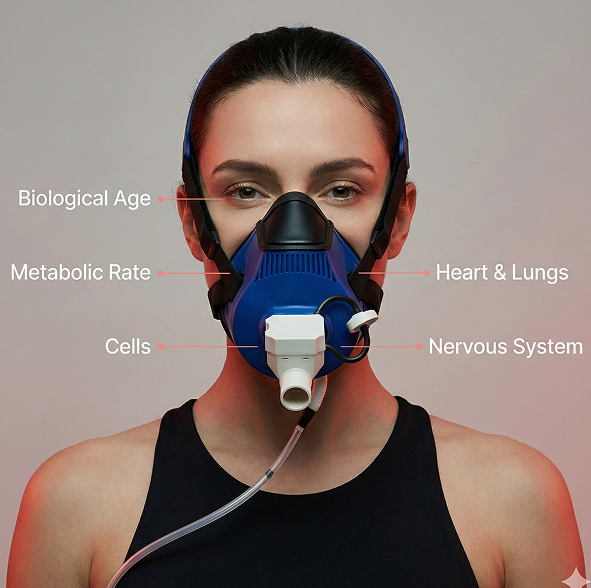
When we look at metabolic data, the picture changes quickly. We see resting metabolic rate instead of estimating calories. We see how efficiently the body is burning fat versus carbohydrates. We see aerobic thresholds that determine where fat oxidation is optimized. We see whether someone is under fueling, overtraining, or simply misaligned with their physiology.
One client came in frustrated. She was 47, consistent with training 4 days per week, eating what she thought was a fat loss calorie target. Despite her effort, she had gained eight pounds over two years and felt constantly drained.
Her metabolic assessment revealed something surprising. She was under fueling relative to her resting metabolic rate. Her body had adapted by conserving energy. She was also spending most workouts above her optimal fat oxidation zone. High effort. Low return.
Through InstaPhysique: Insights, powered by PNOE, we helped her see she needed to adjust her fueling to match her actual metabolic demand. We structured training and recovery schedule around her measured thresholds instead of generic heart rate formulas. We prioritized lean mass retention and strategic intensity rather than constant intensity.
Within months, her energy stabilized, recovery improved, body composition began shifting in the right direction, and most importantly, her confidence returned. She stopped blaming her hormones and started understanding them.
This is the difference between reacting emotionally and responding strategically.
Menopause does not eliminate your ability to perform. It simply changes the rules. When you understand your metabolism, you stop fighting your body and start working with it.
If you are a driven woman navigating perimenopause or menopause and feeling like your old strategies are no longer delivering results, it may not be a motivation problem. It may be a data problem.
Start with measurement. Build from clarity. Train with intention.
If you are ready to stop guessing and start optimizing, schedule your metabolic assessment and build your next phase of performance from a foundation that is actually yours.