Strength training has long been measured by one thing: load.
How much can you lift?
How heavy can you go?
How many plates are on the bar?
But real strength is not defined by a number. It is defined by how well you can generate and control force under sustained demand.
That distinction changes everything.
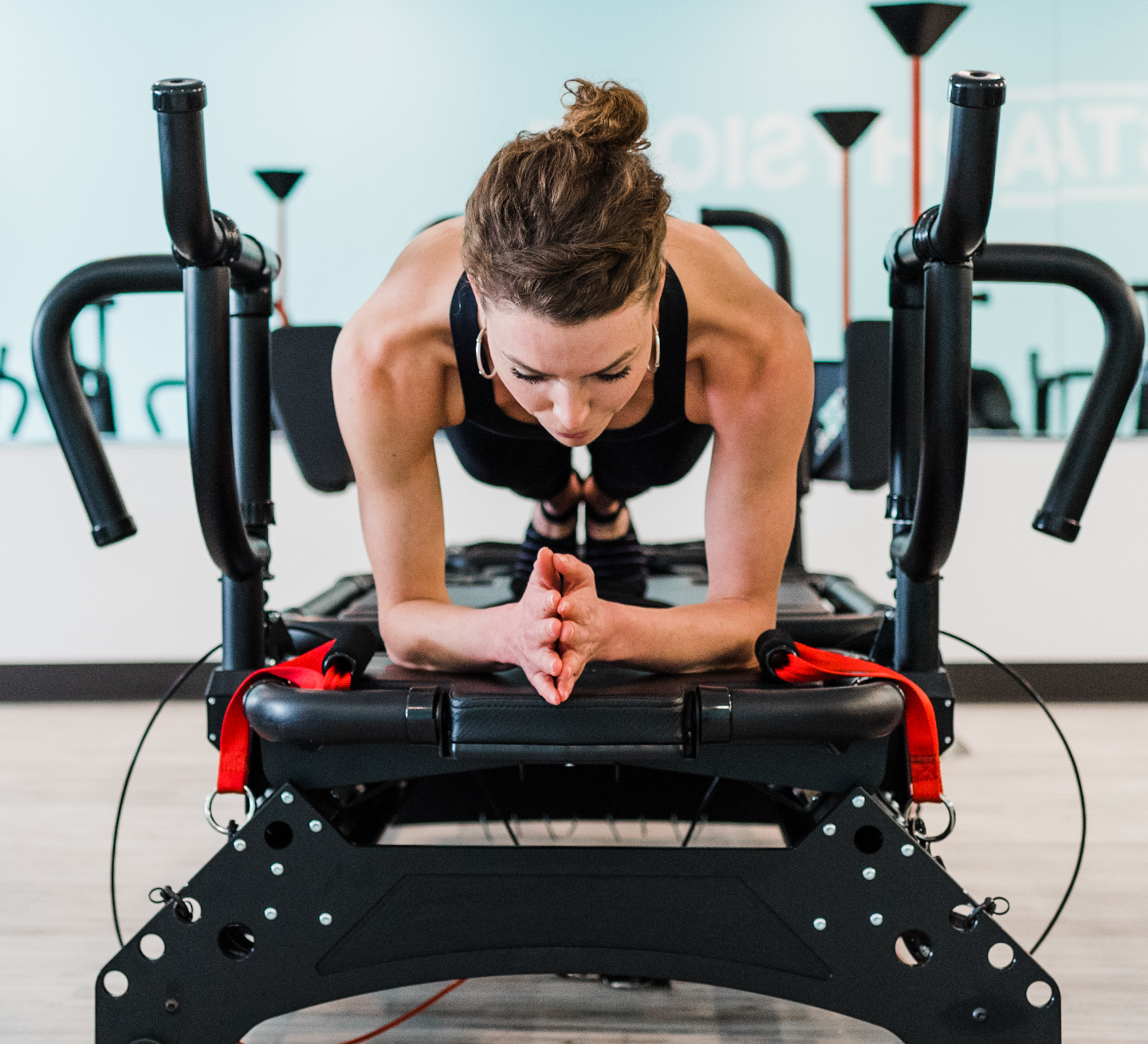
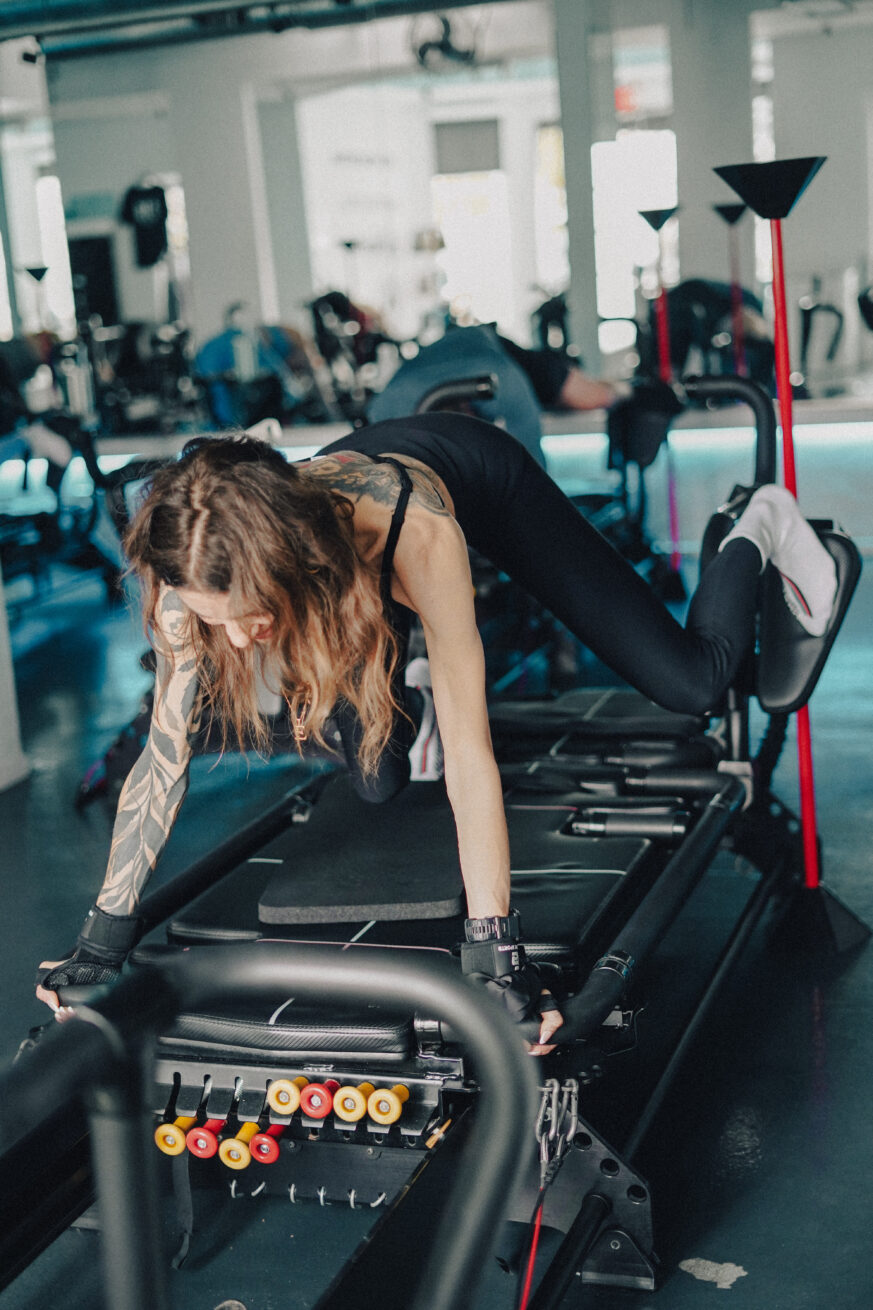
At InstaPhysique, the Megaformer shifts the focus from how much you lift to how long your muscles stay working. Instead of chasing heavier weight, the Lagree method we practice prioritizes controlled resistance, continuous engagement, and precision throughout every second of a set.
That is where true strength is built.
What Does “Strength Built Under Tension” Mean?
Strength built under tension refers to the amount of time a muscle remains actively producing force without meaningful rest or momentum assisting the movement.
In traditional lifting, tension peaks during the hardest portion of a repetition and then decreases at lockout or during the reset. Even small pauses create micro-recovery moments. Momentum can assist the concentric phase. Stabilizers may briefly disengage.
At InstaPhysique, the method we practice, Lagree, minimizes those gaps.
Resistance remains consistent through the full range of motion. Movements are slow and deliberate. Transitions are controlled. The core and stabilizers stay engaged for extended periods.
Every second carries demand.
The result is significant mechanical tension combined with metabolic stress and sustained motor unit recruitment. Clients who use InstaPhysique for cross training often report improved power output, better control, and more resilience in their primary sport.
Let’s break down some common myths about traditional strength training vs building strength under load:
Myth #1: Heavier Weight Automatically Builds More Strength
Heavier weight can build strength, particularly maximal force production. But adaptation depends on total mechanical tension and sufficient stimulus, not load alone.
If tension drops repeatedly within a set, the muscle experiences intermittent demand. To drive adaptation, more volume or more load is often required.
The Megaformer demonstrates that lower external load can still produce high muscular demand when tension is continuous and rest is limited.
Strength doesn’t just make the body produce force once. It makes you sustain and control force over time.
Myth #2: Lagree Is More Similar to Pilates than Strength Training
This misconception often comes from equating strength with maximal load. If it is not heavy, it must not be strength training. And if it uses a carriage and springs, it must be Pilates.
Lagree and reformer Pilates share equipment similarities, but they are built for different outcomes. Reformer Pilates emphasizes movement quality, alignment, and controlled strength through varied sequencing. At InstaPhysique, we care deeply about alignment and control, but also use the Megaformer to create progressive muscular overload through longer time under tension, minimal rest, and continuous fatigue.
True strength is the ability to generate and control force across time, range of motion, and instability.
Strength under tension on the Megaformer develops:
• Core strength that does not switch off
• Sustained stabilizer activation
• Muscular endurance alongside force production
• Balanced development across muscle groups
InstaPhysique does not ignore strength training principles. We refine them through continuous resistance.
That is why strength is built under tension, not just weight.
Myth #3: Traditional Dumbbells Are Enough for Total Body Strength
Free weights are highly effective for building strength. But their structure naturally allows tension to fluctuate within a set.
Lockouts reduce muscular demand. Resets create brief recovery. Momentum can assist movement.
Lagree is structured to reduce those fluctuations.
By minimizing intra-set rest and limiting momentum, the Megaformer keeps muscles producing force for longer uninterrupted periods. That sustained demand increases total time under tension and challenges stabilizers under fatigue.
The result:
Stronger muscles under fatigue.
Greater core integration.
Improved joint stability.
Higher muscular endurance.
Strength that maintains integrity when the body is tired.
If strength is the ability to generate and control force over time, continuous resistance produces a more resilient form of strength.
Why Continuous Tension Builds Better Strength
When muscles remain under consistent tension, several adaptations occur:
• Muscle fibers are recruited across a broader fatigue spectrum
• Stabilizers remain engaged for longer durations
• Metabolic stress increases
• Local muscular endurance improves
This creates strength that translates beyond aesthetics.
Clients report improved posture, enhanced joint control, and better performance in sport and daily movement.
Frequently Asked Questions
Is resistance training better than weightlifting?
While the Megaformer is all you need to build lifelong strength, Lagree is not designed to replace weightlifting if weight lifting is what you love. Its low impact, joint-conscious design allows you to train consistently, recover faster, and build strength without the wear and tear that can come from heavy loading. By strengthening stabilizers, improving core integration, and increasing muscular endurance under tension, the Megaformer supports better mechanics when you do lift heavy. The result is not either or. It is smarter training that lets you lift stronger, longer, and with more control.
Can you build muscle with Lagree?
Yes. Muscle growth is primarily stimulated by mechanical tension and metabolic stress, not just heavy load alone. The Megaformer creates prolonged time under tension with continuous resistance, which increases motor unit recruitment and muscular fatigue even at moderate loads. Research consistently shows that hypertrophy can occur across a range of loads when sufficient tension and effort are present. Lagree delivers both through sustained muscular demand. The result of the eccentric loading on the Megaformer? Long, lean, strong muscles.
Why does Lagree feel harder than lifting heavier weights?
Lagree feels harder because tension does not meaningfully drop within a set. In traditional lifting, lockouts and brief resets allow partial recovery between repetitions. On the Megaformer, muscles remain engaged for extended periods with minimal intra-set rest, increasing metabolic stress and cumulative fatigue. That continuous demand accelerates fatigue even when the external load is lower.
Is Lagree good for men?
Absolutely. Strength adaptation is not gender specific. Core stability, joint control, muscular endurance, and balanced force production are performance advantages for any athlete. The Megaformer challenges prime movers and stabilizers simultaneously, which supports better lifting mechanics, injury prevention, and sustained strength output. Men who incorporate InstaPhysique often find improved control, durability, and performance in their primary training modality – it often becomes their primary training modality!
If you are ready to experience what continuous engagement feels like, book your class at InstaPhysique and train strength the way it was meant to be built – our 2 week intro is available in Sacramento: Arden & Midtown, Roseville, and Folsom (coming soon!)